
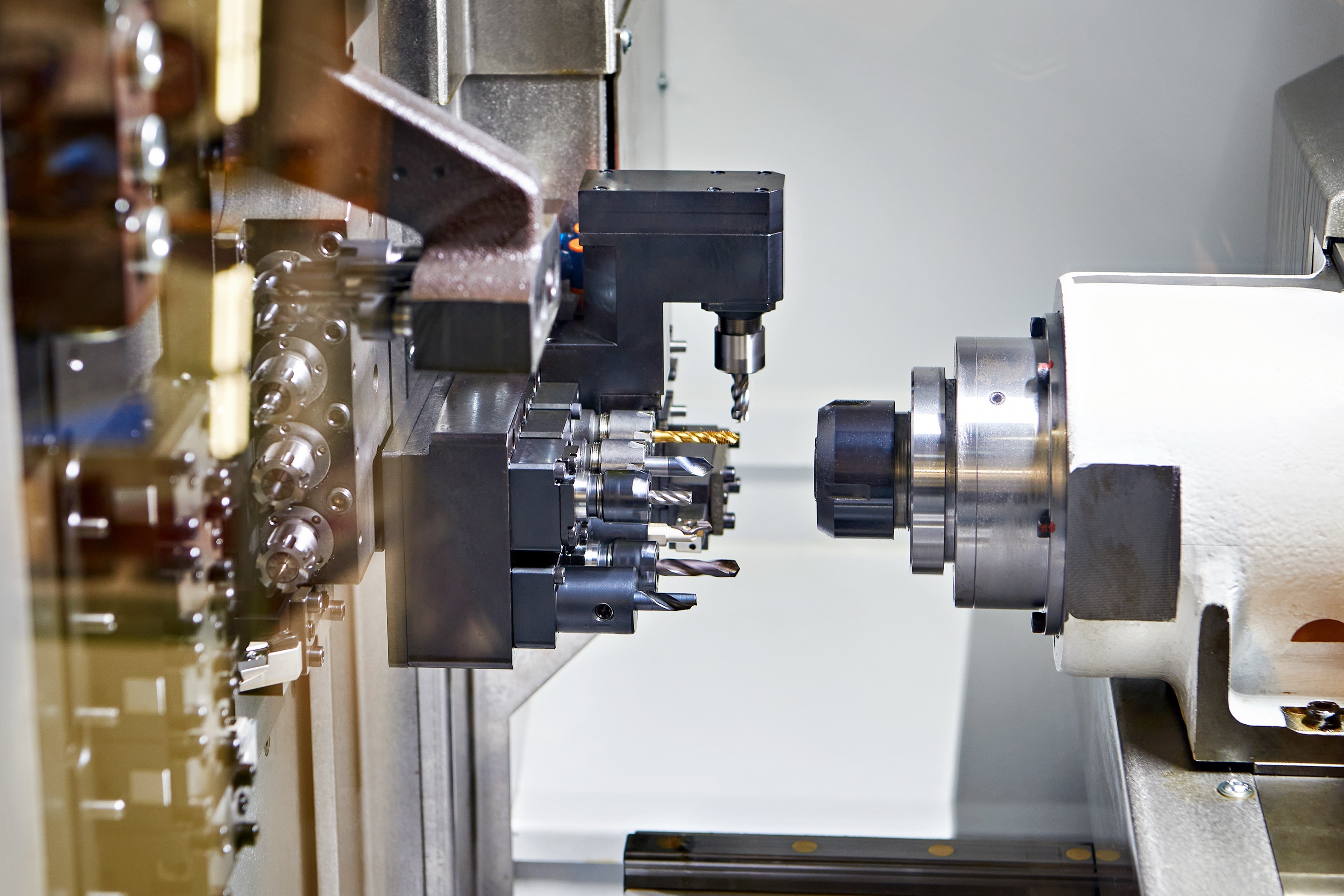
Eleven Companies. One Manufacturing Platform.
Each Compass Precision facility has its own history, technical leadership, and manufacturing identity. What they share are quality standards, documentation practices, and access to the resources of a national platform.
Facilities
Why the Structure Matters to Your Program
Most precision manufacturers are a single location with a defined set of equipment, certifications, and capacity. When that location is at capacity, or a program outgrows what one shop can do, the customer finds a new supplier and starts the qualification process from scratch. Adding new capabilities means vetting, onboarding, and auditing a completely new vendor.
Compass Precision is built differently. When a program comes in, it gets matched to the facility best positioned to run it, by process, certification, capacity, and application fit. When that program grows, or when it needs a capability a second facility can provide, the work stays inside the platform. The customer relationship does not change. The quality standard does not change. The documentation does not change.
Eleven facilities.
One point of contact.
One quality standard.
Facilities
Single-Site Dependency vs.
The Compass Precision Platform
The difference is not just capacity. It is how programs are managed, qualified, and protected when requirements change. When your program scales up or requires new capabilities, the traditional model breaks down. Here is how the Compass Precision platform removes those bottlenecks and mitigates supplier and program risk.
| Program Factor | Single-Site Machine Shop | The Compass Precision Platform |
|---|---|---|
| Capacity Limits | Hit capacity, and the schedule slips or a new supplier has to be found. | Programs route to whichever facility has the capacity, no scramble required. |
| Scaling Up | New capabilities mean vetting, onboarding, and auditing a vendor from scratch. | New capabilities are already inside the platform, one vendor relationship. |
| Supply Chain Risk | One location means one point of failure for downtime or disruption. | Work shifts across facilities automatically if something is disrupted. |
| Quality & Traceability | Every new vendor means re-qualifying and rebuilding first-article documentation. | The same standard and documentation follow the work everywhere. |
Contact
Our Facilities
Compass Precision operates 11 facilities across the United States.

Compass Precision is a national platform of precision manufacturing facilities, each with its own history and technical identity, built through disciplined acquisition since 2019. Together they serve aerospace, defense, semiconductor, medical, and industrial programs under one shared standard of quality and execution.

Accu-Tool joined the Compass Precision platform in 2026, bringing decades of semiconductor and precision machining expertise from North Carolina’s Research Triangle. The facility machines complex components for aerospace, medical, semiconductor, and industrial programs.

Founded in 1985 as one of Compass Precision’s three original facilities, Advanced Machining brings deep precision manufacturing experience to Salisbury, North Carolina. The team runs 5-axis CNC milling, mill-turn, and wire and sinker EDM for aerospace, defense, medical, and power generation programs.
Bergeron Machine has run Swiss screw machining in Westford, Massachusetts since 1948. The team produces small-diameter components in Inconel, titanium, and other difficult materials that most Swiss shops turn away.
Douglas Machining Services is the platform’s dedicated mill-turn specialist, running multi-tasking machines from Winona, Minnesota. Turning and milling in a single setup shortens lead times and removes the hand-off error that comes with moving parts between machines.
Gray Manufacturing Technologies in Denver, NC is the Compass Precision platform’s specialist in titanium and high-temperature alloy components for aerospace, defense, and space programs, running 5-axis mills with lights-out pallet automation.
Pocasset Machine has served the oceanographic and autonomous underwater vehicle markets from Cape Cod, Massachusetts for decades. The team machines components for sonar systems, acoustic equipment, and laboratory hardware.
Quality Products & Machine is the platform’s fabrication specialist, combining precision CNC machining, laser cutting, metal forming, and welding under one Charlotte, North Carolina roof. In-house engineering carries programs from first article through finished assembly.
R&D Machine runs 5-axis CNC machining and multi-tasking mill-turn for aluminum aerospace and space components from Oldsmar, Florida. The facility is AS9100D certified and ITAR registered, and one of its components is currently aboard NASA’s InSight Mars lander.

Precision CNC milling with pallet-equipped horizontal machining centers running lights-out since 1974. Strom’s secondary operations, including graining, anodizing, powder coating, and assembly, keep programs inside the platform from machining through finished component.

Tri-Tec Industries has run contract manufacturing for fluids filtration, industrial automation, and chemical processing customers from Charlotte since 1997. The team operates as a direct extension of customer manufacturing and engineering teams on recurring programs.

Founded as an EDM shop in 1967, Trutron Corporation has grown into a full-service aerospace and defense facility in Troy, Michigan. Decades of EDM heritage give the team depth on complex-geometry tooling that most CNC shops cannot match.

Contact
Not Sure Which Facility
Fits Your Program?
Tell us what you are working on. We will identify the right facility and connect you directly.